

About this part
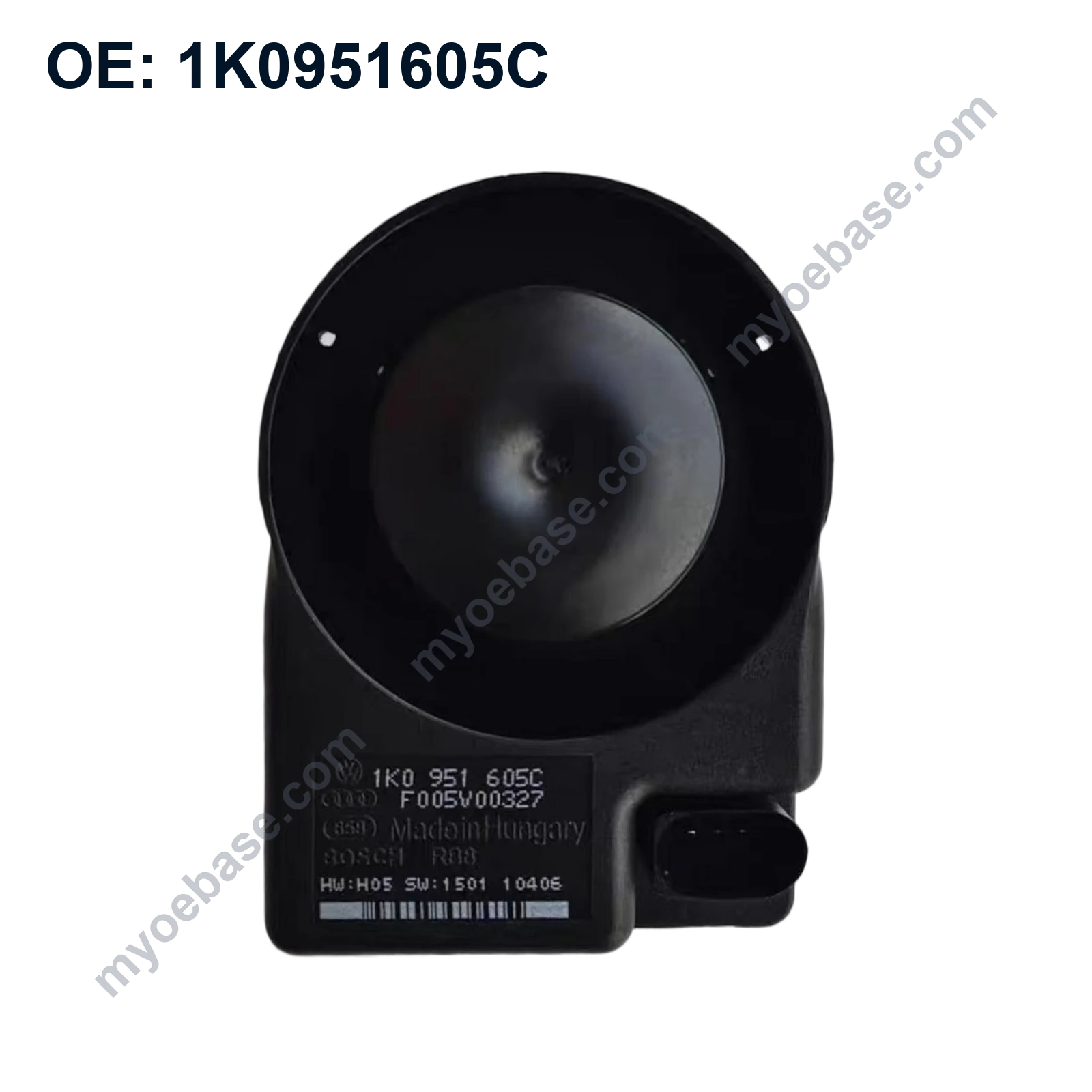
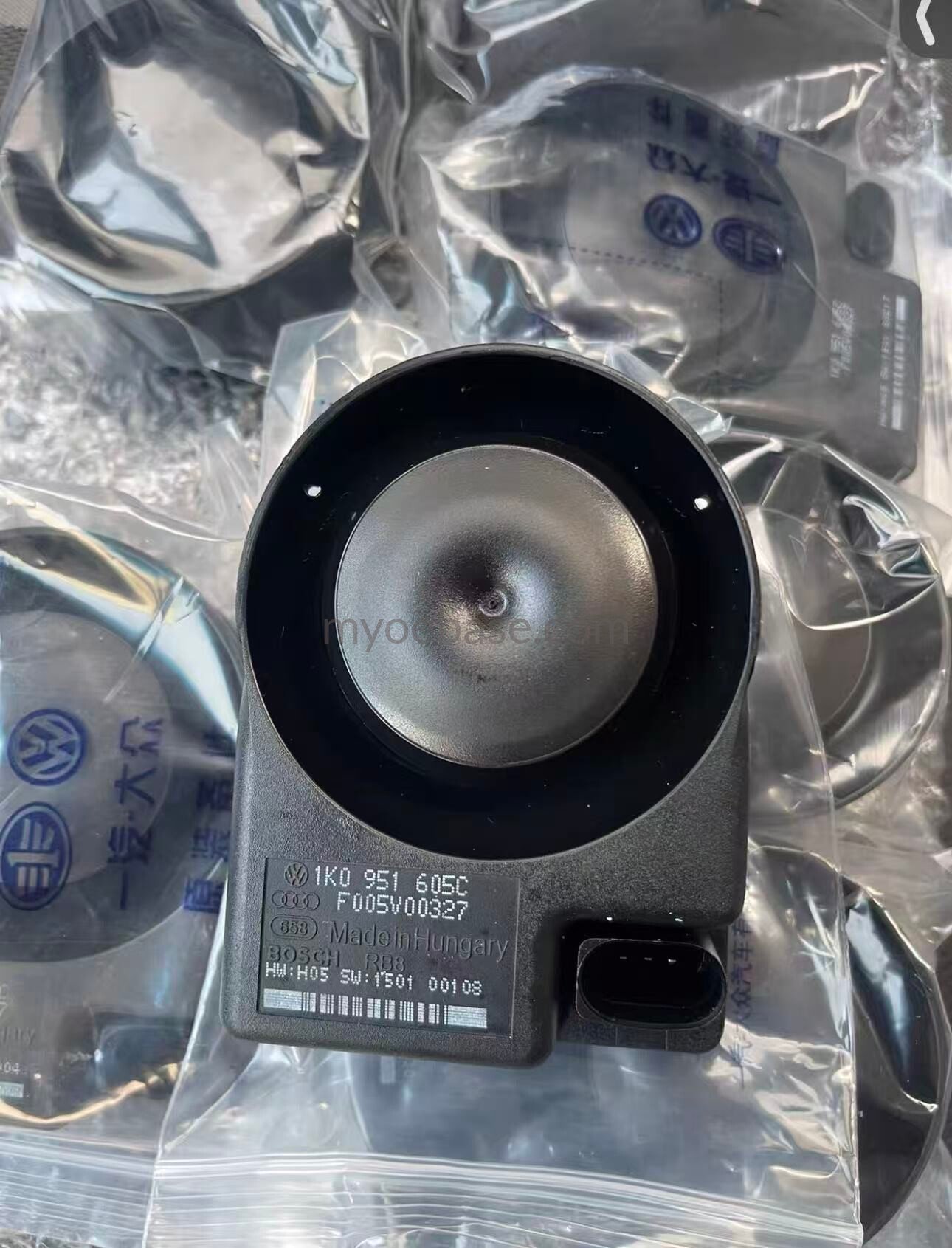
The 1K0951605C Alarm Horn is a brand new genuine OEM Volkswagen Group anti-theft alarm siren, built by Bosch in Hungary and supplied with its original printed and embossed factory label and the VW security card as photographed. It is the compact black unit with a round silver-grey metal dome set into a black circular surround, a rectangular housing carrying the identification label, and a small black three-pin electrical connector on the side. Workshop manuals call it the alarm horn, the anti-theft alarm siren, the Alarmhorn or the siren for the Diebstahlwarnanlage; parts catalogues file it under 1K0 951 605. It is NOT the pair of ordinary twin-tone fanfare horns behind the grille that sound when you press the steering wheel pad, and it is NOT a keyless entry buzzer, a reverse beeper or a parking sensor speaker. Its single job is to make a loud, penetrating, self-powered noise when the factory anti-theft alarm decides the car has been broken into. That independence is the whole point of the design: the unit carries its own rechargeable Ni-MH backup cell, so cutting the battery lead, disconnecting the car battery or smashing a connector does not silence it. Once triggered, it keeps sounding for fifteen minutes or more on its internal battery alone. The unit in our photographs is brand new and unused, with the label reading 1K0 951 605C and F005V00327 above BOSCH RB8, HW: H05 and SW: 1501, and with the CE and Ni-MH markings moulded into the rear face.
Alarm horn — one brand new genuine 1K0 951 605 C Bosch anti-theft alarm siren with its built-in Ni-MH backup battery and original factory label, supplied on its own without a mounting bracket, wiring harness, connector pigtail, VCDS or ODIS coding, diagnostic time, tools or fitting labour.
OE/OEM Part Number:
1K0951605C, 1K0 951 605 C, 1K0 951 605C, L1K0 951 605 C, 1K0951605A, 1K0 951 605 A, 1K0951605B, 1K0 951 605 B, 1K0951605D, 1K0 951 605 D, 1K0951605F, 1K0 951 605 F, 1K8951605, 1K8 951 605, 1K8951605A, 1K8 951 605 A, 1K8951605B, 1K8 951 605 B, 6R0951209, 6R0 951 209, F005V00327, F 005 V00 327
Bosch references F005V00327, product family BOSCH RB8, hardware HW: H05, software SW: 1501, Made in Hungary. The VW security card reads L1K0 951 605 C, ALARM GENERATOR, 4KF, P003 and the date 2025 12.25. The rear housing carries the CE mark and the Ni-MH crossed-bin battery symbol. The short batch-end code printed after the software line is a production traceability number: our two photographed units carry different ones, so we do not present any single batch code as an identifier for this part.
Which earlier numbers this one replaces
The 1K0 951 605 family ran through several letter suffixes over a long production life, and the siren is one of those rare VAG parts where the later letter is genuinely a running change rather than a different component. Genuine-parts listings name 1K0951605C as the number that replaces 1K0951605A, 1K0951605B, 1K0951605D and 1K0951605F, together with the 1K8 951 605 and 1K8 951 605 A / B family used on some Audi and Skoda applications and the smaller 6R0 951 209 unit. That is why a car built in 2006 may have an A suffix siren in the wheel arch while the same model built in 2014 has a C suffix, and why a breaker listing an old suffix can still be the correct donor part. The Bosch number F005V00327 is the manufacturer code for the same hardware, not a second part to order.
What is NOT interchangeable is the plug and the signal protocol. This is the three-pin version: permanent 12 V supply, ground, and a single signal line to the J519 central electrics control module. Later MQB and MLB evo cars use different alarm sirens on LIN bus with different connectors and different coding. If the siren in your car has a different plug shape, a different pin count or a different base number, do not assume this unit will work. Photograph the label and the connector face on the old part and compare both with our photographs before ordering.
What the photographed labels tell you
The front label carries the VW and Audi roundels, the part number 1K0 951 605C, the Bosch number F005V00327, a bracketed plant code followed by Made in Hungary, the family marking BOSCH RB8, the hardware and software lines HW: H05 and SW: 1501, a short batch-end code, and a linear barcode. Some of those lines are printed and some are embossed into the black plastic, which is exactly why we photograph the real label rather than redrawing it: an embossed line reads differently from a printed one under workshop lighting, and a refinished or relabelled unit is a common find on the used market. The rear face carries the CE mark and the Ni-MH crossed-bin symbol, confirming that this is the self-powered version with the internal rechargeable cell rather than a plain speaker.
The separate VW security card repeats the number in the L-prefixed packaging form L1K0 951 605 C and gives the English description ALARM GENERATOR alongside the Chinese factory wording, with the codes 4KF and P003 and the date 2025 12.25. The L prefix is a packaging and logistics prefix used on genuine VW spare parts cards; it is not a different part and it is not a reason to order a second siren. Keep the card with the unit if you are reselling it, because workshops checking provenance will want to see both the housing label and the card.
How the alarm horn works
The factory anti-theft alarm is supervised by the central electrics or comfort control module, usually addressed as J519 or 09 in diagnostic software. That module watches the door, bonnet and tailgate contact switches, the interior monitoring and tilt sensor where fitted, and the ignition and key authorisation status. When it decides an intrusion has occurred it sends the trigger down the signal line to this siren, which then generates its own tone independently of the vehicle’s normal horn circuit. The permanent 12 V feed keeps the internal Ni-MH cell charged; the ground completes the circuit; the signal line carries the command. Because the siren owns both its sounder and its power reserve, it still screams if a thief pulls the battery terminal, cuts the harness or smashes the connector. On many cars the same module also uses the siren for the short lock and unlock confirmation chirps, which are enabled in coding rather than by any extra wiring.
This split explains a confusing set of symptoms. A car can have a perfectly working pair of normal horns, working central locking and a dashboard that arms the alarm, yet produce no sound at all when the alarm is triggered, because the siren or its internal cell has failed. Equally, a siren that chirps at random in the middle of the night is often reporting a dying backup cell rather than a real break-in. The alarm horn does not decide when to sound; it only obeys. If the alarm never arms, or arms but never triggers, diagnose the J519 coding, the bonnet and door switches and the interior monitoring before buying a siren.
Why these sirens get replaced
The internal Ni-MH cell is the number one failure. It is a rechargeable battery sealed inside a housing that lives behind a wheel-arch liner, where it sees road salt, water spray, heat soak and years of constant float charging. After eight to fifteen years the cell loses capacity and can leak. Classic symptoms are random chirping when the car is locked and undisturbed, a weak or warbling alarm tone, an alarm that sounds for a few seconds and then dies, a flat battery on a car that was fine the day before, or a fault code for the anti-theft alarm horn in address 09. Some owners report a faint squeal from the wheel arch on a hot afternoon. A new siren cures all of these because the cell is not sold separately and the housing is not intended to be opened.
Water and corrosion. The factory mounting position behind the front wheel-arch liner is deliberately hidden, but a torn liner, a missing splash shield or a pressure-washer session aimed at the wheel arch can put water onto the three-pin connector. Pull the plug and look for green or white deposits, spread pins and a cracked latch before condemning the siren. A corroded connector will kill a brand new unit in weeks. Clean or repair the harness first, and protect the plug with the original-style seal and tape rather than leaving it hanging in the spray path.
Check the obvious first. Read the fault memory across the whole car with VCDS, ODIS or an equivalent tool before ordering. Confirm that the alarm is actually coded as installed, that one of the alarm PR codes 7AL, 7AJ, 7AR, 7AH, 7AN or 7AS is present in the vehicle data rather than 7AA on cars with no alarm, that the bonnet contact switch and all door latches report correctly, and that the permanent 12 V feed at the connector is present with the ignition off. A siren will not fix a missing supply, a car with no factory alarm coding, an aftermarket alarm spliced into the loom, or an interior monitoring sensor that falsely triggers the system. A unit that has been powered up and coded to a car cannot be returned as unused.
Compatible vehicles
Use this table as a starting point only. The 1K0 951 605 family was fitted right across the VW Group range for roughly fifteen years, but whether a specific car received a factory anti-theft alarm at all depends on market, trim level, model year and the PR codes on the build sticker. A car without the alarm option has no siren and no wiring for one, and fitting this unit to such a car is a retrofit that needs a harness, a bracket, a fuse and coding. Confirm every order by VIN, build date, the PR code list and the exact number and plug shape on the old siren. Rows marked Not covered are listed deliberately so that owners of newer platforms and buyers needing a complete retrofit kit do not order the wrong part.
| Make | Model / position | Years / build date | Engine / notes |
|---|---|---|---|
| Volkswagen | Golf Mk5 / Mk6, GTI, Golf R (1K / 5K) | 2005 – 2014 | 1.4 / 1.6 / 2.0 TSI, 1.9 / 2.0 TDI; PR 7AL / 7AJ / 7AR required |
| Volkswagen | Jetta / Sagitar Mk5 / Mk6 (1K / 5C) | 2005 – 2018 | Match the plug and the number on the old siren |
| Volkswagen | Passat B6 / B7, Passat CC (3C / 3AA) | 2005 – 2015 | Including Variant and CC; confirm factory alarm coding |
| Volkswagen | Tiguan (5N) | 2007 – 2018 | Check the PR code list before ordering |
| Volkswagen | Touareg (7P / 7L) | 2005 – 2018 | 3.0 TDI, 3.6 FSI and hybrid; VIN confirmation required |
| Volkswagen | Eos (1F), Beetle (5C), Scirocco (1K8) | 2006 – 2019 | Only cars equipped with the factory anti-theft alarm |
| Audi | A3 / S3 (8P / 8V), A3 Sportback | 2004 – 2020 | 1K8 951 605 family may be fitted; compare the number |
| Audi | A4 / S4 / A4 allroad (B8, 8K) | 2008 – 2016 | Including Avant; alarm coding in address 09 |
| Audi | A5 / S5 / RS5 (8T) | 2007 – 2017 | Coupe, Sportback and Cabriolet; confirm the old suffix |
| Audi | A6 / S6 / A6 allroad (C6 4F, C7 4G) | 2004 – 2018 | 2.0 TFSI, 3.0 TDI, 3.2 FSI; widely fitted with this siren |
| Audi | A7 / S7 / RS7 (C7, 4G) | 2010 – 2018 | Check the number and the three-pin connector |
| Audi | A8 / S8 (D3 / D4) | 2005 – 2017 | Confirm VIN, build date and old unit number |
| Audi | Q3 (8U), Q5 (8R), Q7 (4L / 4M) | 2006 – 2020 | Suffix and plug vary by market and model year |
| Audi | TT / TTS / TT RS (8J / 8S), R8 | 2006 – 2020 | Only where the factory alarm is present |
| Porsche | Macan (95B), Panamera (970) | 2010 – 2020 | Shared VAG alarm siren; match the old Bosch number |
| Skoda | Octavia, Superb, Yeti, Fabia | 2005 – 2020 | Often supplied as 1K8 951 605; compare label and plug |
| SEAT | Leon, Altea, Toledo, Exeo | 2005 – 2018 | Confirm the factory alarm option by VIN |
| Not covered | Cars with PR 7AA (no factory alarm) | – | No siren, no harness and no bracket fitted from the factory |
| Not covered | MQB / MLB evo cars: Golf 7 / 8, A4 B9, Q5 FY | – | Use the newer LIN bus alarm siren with a different connector |
| Not covered | Buyers needing a harness, bracket, fuse or coding | – | This parcel is the horn only, not a retrofit kit or a service |
| Not covered | VIN, PR codes or old part number not yet checked | – | Order only after the number and the plug are confirmed |
Fitting and coding – read this before you buy
Three wires and a bracket. The three-pin connector carries permanent 12 V, ground and the signal line to the J519 central electrics module. On most cars the siren sits behind the front wheel-arch liner or on a bracket in the engine bay, away from direct spray and out of sight. Removing the liner, undoing one bolt, unplugging the old unit and refitting the new one is usually a short job, but the bracket and the harness are vehicle-specific and are NOT included here. Never cut and join the signal line with ordinary crimp connectors in a wheel arch: use the correct sealed repair wire or the original-style plug, route it away from moving parts and hot surfaces, and protect the permanent feed with the correct fuse. Disconnect the battery before unplugging the old siren, and remember that the unit has its own power source: a triggered or faulty siren may keep sounding after the car battery is disconnected.
Coding is required on a retrofit. On a car that already had this siren from the factory, a straight swap normally needs no coding at all. If the car was built without the alarm or a previous owner removed it, the anti-theft alarm must be enabled in address 09 central electrics with VCDS, ODIS or an equivalent tool, usually by setting the relevant byte in the long coding and enabling the lock and unlock confirmation chirps and the country-specific alarm behaviour. Check the PR codes on the build sticker: 7AL, 7AJ, 7AR, 7AH, 7AN, 7AQ and 7AS all describe factory anti-theft alarm packages with a backup horn, while 7AA means a car with an immobiliser but no alarm. Genuine-parts catalogues list 7AL and 7AS directly against the 1K0 951 605 F siren family. Without the coding the siren will sit there silently no matter how carefully it is wired. We do not provide diagnostic tools, online access, coding sessions or workshop instructions beyond this overview.
After fitting. Clear the fault memory in address 09 and across the vehicle, then test more than the obvious: lock the car with a window open, wait for the interior monitoring to arm, reach in and unlock the door from inside, and confirm the siren sounds. Check the bonnet contact, the tailgate, the lock confirmation chirps and the behaviour after a full sleep and wake cycle. Disarm, rescan and confirm no anti-theft alarm horn faults return. Finally verify that the permanent 12 V feed is charging the internal cell, because a siren with a flat backup battery offers no protection at all when the wiring is cut.
What is and is not in the parcel
One brand new 1K0 951 605 C Bosch anti-theft alarm horn as photographed, with its printed label, its internal Ni-MH backup battery and the three-pin connector. Nothing else. No mounting bracket or bolt, no wheel-arch liner clips, no wiring harness, no connector pigtail or repair wire, no fuse or fuse holder, no VCDS cable or ODIS interface, no online login, no coding or long-coding service, no PR code check, no workshop manual or wiring diagram, no retrofit instructions, no diagnostic time, no tools and no fitting labour. A new siren will not fix a missing factory alarm option, a corroded connector, a chafed harness, a faulty bonnet switch or a car whose central electrics module has been coded incorrectly. This is a hardware listing, not an alarm retrofit kit and not a coding or installation service.
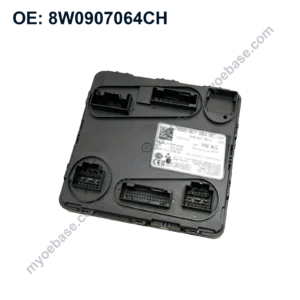
Do not confuse this with our other listings. The body control modules we sell, such as 4N0907064AH (product 4978), 4N0907064DM (product 4614), 8W0907063CG (product 4622), 5WA937084AD (product 4628) and 8W0907064CH (product 1577), are the control units that supervise the alarm system; they are not the sounder itself. A faulty control module and a faulty siren produce similar complaints but need completely different parts. Likewise the ordinary twin-tone fanfare horns, parking sensors and reversing buzzers are unrelated components. If your diagnostic report points at a control module rather than the alarm horn, do not order this siren.
Condition and warranty
Brand new, unused, twelve months warranty against manufacturing defects, covering the siren as supplied. The internal Ni-MH backup battery is a consumable cell with a finite service life; gradual loss of capacity through age, heat or long storage is normal wear and is not a manufacturing defect. The warranty does not cover a unit that has been opened, drilled, soldered, repainted, dropped, pressure washed, reverse-polarity connected, exposed to water ingress through a damaged connector, damaged by a voltage spike, or fitted with the wrong plug or without the correct fuse. It does not cover faults caused by a missing factory alarm option, incorrect central electrics coding, a corroded harness, a weak vehicle battery or any other part of the car. Coding, diagnostic time, online fees, brackets, wiring and fitting labour are not covered. A siren that has been powered up, coded or fitted cannot be returned as unused. If a unit is faulty on arrival, send us the fault memory log from address 09 before returning anything, and keep the original siren and the job card until every alarm function has been tested.
Shipping and packing
Orders leave within one to two working days of cleared payment. The siren is wrapped so the printed and embossed label cannot be scuffed and the connector face is protected, then boxed with enough padding to keep the metal dome from being dented. On arrival, open the parcel before booking workshop time and compare the housing, the three-pin connector and every line of the label with our photographs. Photograph the label and confirm that 1K0 951 605C, F005V00327, BOSCH RB8 and the hardware and software lines are legible. Please photograph the outer carton before signing for a parcel showing impact or water damage. Import duties and local taxes, where they apply, are the buyer responsibility. Tracking is emailed when the parcel is handed to the carrier.
Not sure this is the right siren?
Send us the VIN, the build date, the PR code list from the service book or build sticker, and a clear photograph of the label and the connector face on the siren currently in the car. We will read the suffix with you, check whether your car has the factory alarm at all and confirm that the three-pin plug matches. That is far cheaper than a silent alarm, and it takes minutes rather than a workshop visit. If the old unit is missing entirely, tell us which wheel arch or bracket position you are looking at and we will tell you what else a retrofit needs.
Wholesale
Tiered pricing for 1 pc, 5 pcs and 20 pcs is shown below, with every tier priced for one complete alarm horn rather than for a retrofit kit or a service. VAG specialists, independent workshops and parts distributors keep these sirens on the shelf because the internal Ni-MH cell fails on almost every car of this age eventually, and the resulting random chirping is one of the most common complaints a workshop sees on a ten-year-old Golf, A4 or Q5. Ask for a combined quote if you also need central electrics modules, bonnet contact switches, alarm harness repair wires or key and remote components; we price mixed orders together and can hold stock for repeat workshop orders. Send the VIN range and a photograph of a representative old unit with volume enquiries so we can confirm the suffix and the plug before dispatch.