

About this part
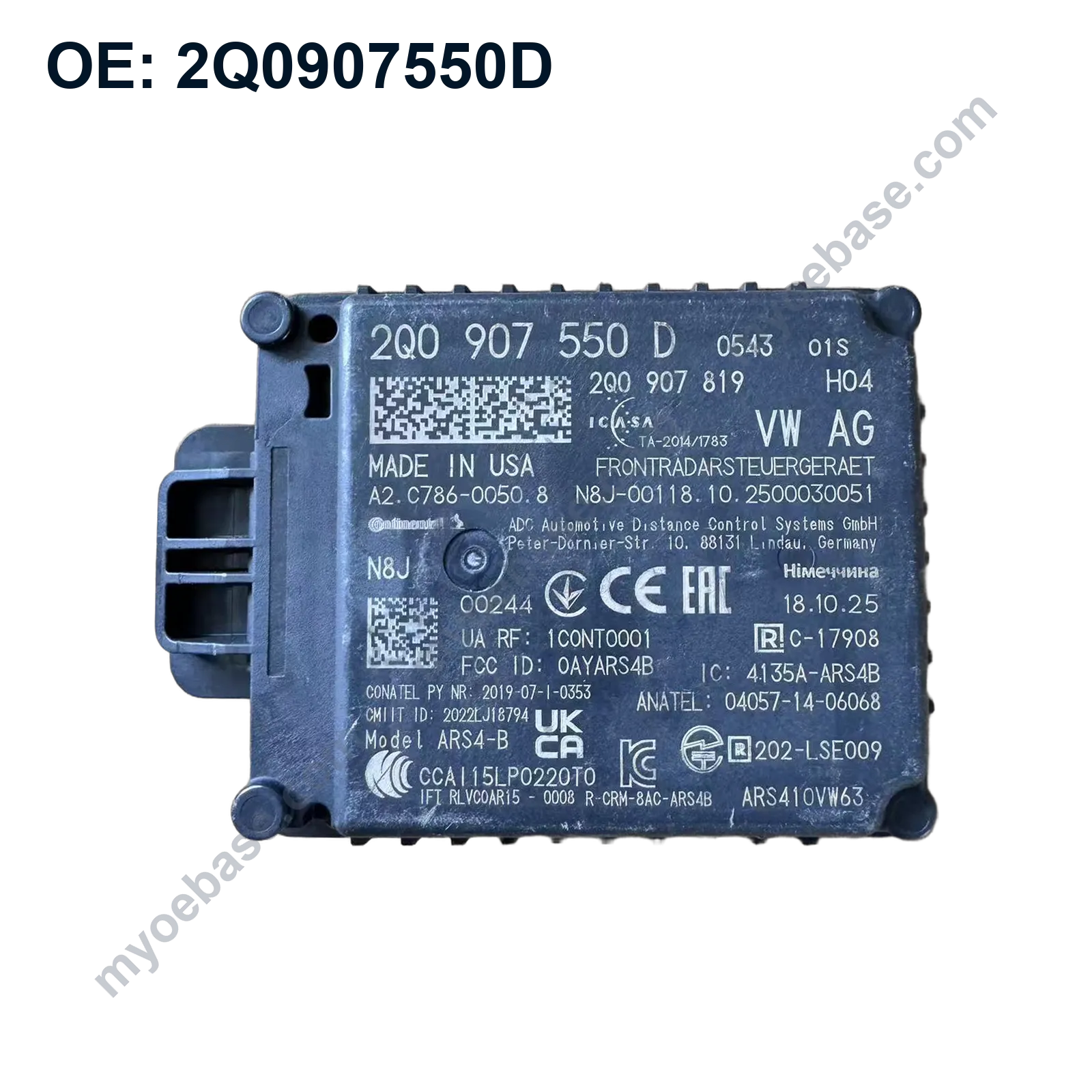
The 2Q0907550D radar sensor is the brand new genuine OEM front distance radar control module for the Volkswagen Group MQB and MQB A0 cars equipped with Adaptive Cruise Control, Front Assist and automatic emergency braking. Built by Continental on the ARS4-B platform for VW AG, it sits behind the front badge or lower grille and measures the distance and closing speed of everything ahead, feeding the ACC and Front Assist systems over the CAN bus. The label on this unit reads 2Q0 907 550 D, hardware reference 2Q0 907 819 H04, software index 0543 / 01S, model ARS4-B, and carries the VW AG and Continental markings — made in USA. It is a brand new, genuine quality replacement sensor for workshops and owners dealing with an ACC system that will not activate, a Front Assist warning that will not clear, or a car that has come back from front-end damage with a cracked or misaligned radar.
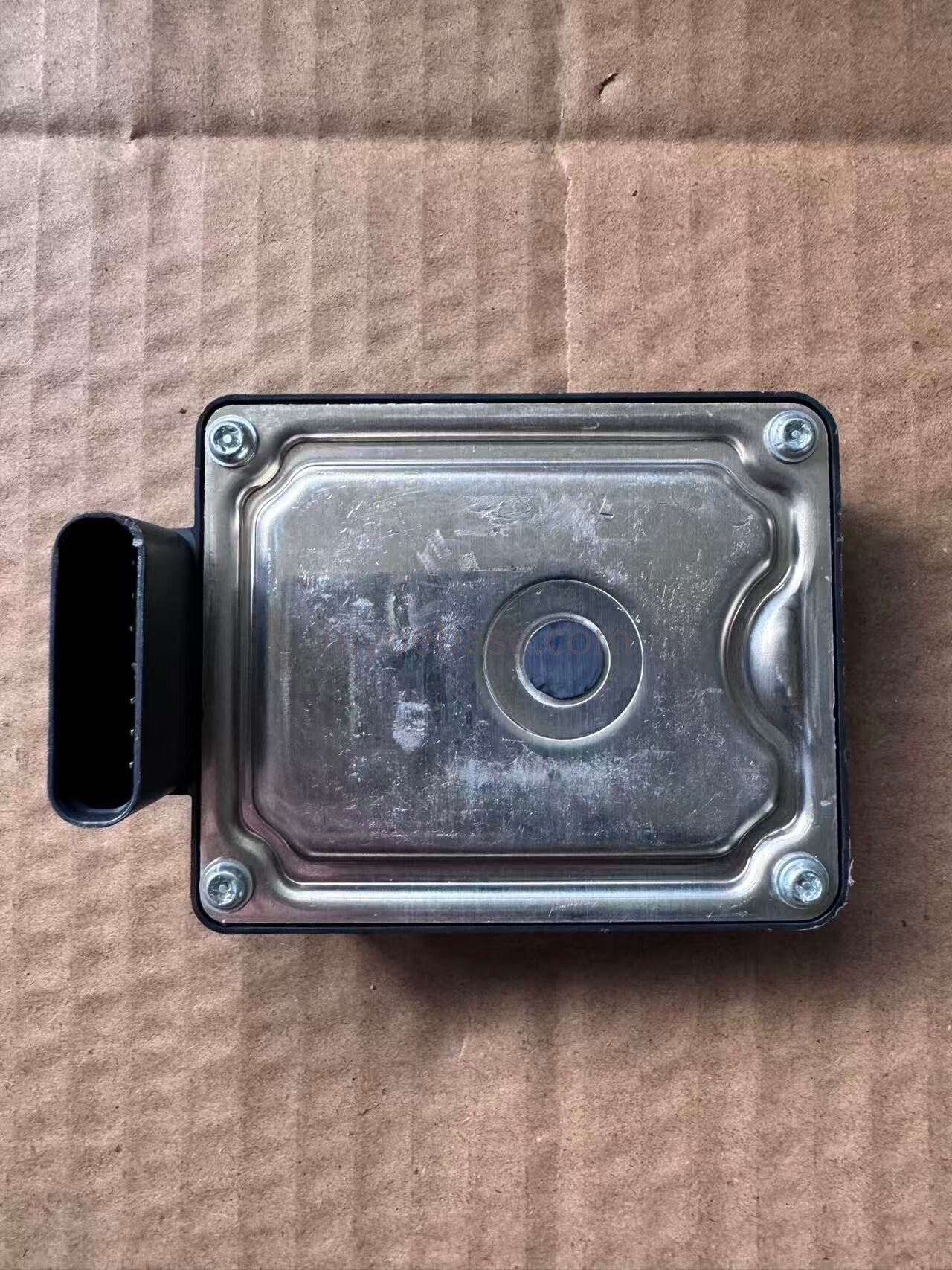
radar sensor — genuine 2Q0907550D front ACC radar control module on the Continental ARS4-B hardware, with the 2Q0 907 819 H04 hardware reference printed on the label; the current superseding number for 2Q0907550C and the earlier 2Q0907550A / B units.
OE/OEM Part Number:
2Q0907550D, 2Q0907550C, 2Q0907550B, 2Q0907550A, 2Q0907550, 2Q0907819
Continental: ARS4-B
What the radar does, and why it fails
The eyes of the driver assist system. The front radar is the only sensor that measures range and closing speed directly, in rain, fog, glare and darkness where a camera struggles. The ACC control strategy uses its target list to hold the set gap, while Front Assist uses the same data to warn, pre-charge the brakes and, if the driver does not react, brake the car. A radar that drops out does not just disable cruise control — it takes the collision mitigation functions with it, and the car reports the whole assist stack as unavailable.
Failure mode one: misalignment after a front-end hit. The radar lives on a plastic bracket behind the grille, where even a low-speed parking impact can crack the mount or shift the unit a degree off axis. The electronics still work, but the beam no longer points straight down the road: the system either logs an alignment fault or, worse, reads the guard rail as a vehicle and brakes for no reason. Any radar bracket damage means alignment and calibration, not just a bolt-up.
Failure mode two: water and connector corrosion. The unit faces forwards into spray, road salt and car-wash jets. A tired housing seal lets moisture reach the board, and the multi-pin connector at the side corrodes. The first sign is intermittent “ACC currently unavailable” messages that come and go with the weather, then a permanent fault with CAN communication or supply voltage codes. Inspect the connector pins for green deposits before condemning the wiring.
Failure mode three: internal electronics. The transmitter and receiver stages and the internal power supply age with heat soak behind a closed grille. Once the module itself fails, the only repair is replacement with the correct hardware and software index, followed by calibration. A used sensor of the wrong letter version may physically bolt up but will not code in, so the part number and the label data matter more than the shape of the case.
Symptoms, diagnosis and installation
• Typical symptoms — “ACC / Front Assist currently unavailable” on the dash, adaptive cruise that refuses to engage, Front Assist or AEB warning lights, spurious emergency braking near metal barriers, fault codes for radar alignment, CAN communication or sensor supply, and a driver-assist system that is dead after a bumper or grille repair.
• Confirm it before ordering — read the fault memory with a diagnostic tool that can talk to the distance regulation module (address 13). Check the connector and harness first: corrosion, a loose latch or a damaged pin is a cheaper fix than a module. Inspect the bracket for cracks and the radar face for dirt, ice, paint, a badly fitted badge or an aftermarket grille — radar cannot see through metallic paint or an emblem that was not specified for ACC. Then read the number on the original unit: the 2Q0 907 550 letter suffix and the 2Q0 907 819 hardware reference on the label are the reliable check, not the model year alone.
• Installation notes — disconnect the battery, remove the grille or bumper cover to reach the bracket, unplug the connector and unbolt the old unit. Fit the new sensor on a sound, undamaged bracket and torque the mounts evenly; never shim a bent bracket. Replacement of a front radar always requires calibration — static calibration with the official targets or the manufacturer’s dynamic drive procedure, depending on the vehicle — plus coding and parameterisation of the distance regulation module with ODIS, VCDS or an equivalent tool. Clear the fault memory and road-test the ACC and Front Assist functions before handing the car back. Without calibration the system stays unavailable or, worse, brakes on false targets.
• Fitment caution — this is a replacement sensor for cars that left the factory with front radar, not a retrofit kit, and it does not add ACC to a car without the wiring, stalk, ABS and gateway hardware. The 2Q0 family spans several software and hardware revisions across VW, Audi, SEAT and Skoda MQB A0 models; the same model and year can be built with different radar hardware. Compare the full number on your old unit with the list above and send us a photo of the original label if you are unsure. 2Q0907550D is the current number, superseding 2Q0907550C; the earlier A and B letters are older revisions of the same 2Q0 platform.
Fitment
The 2Q0 front radar is fitted across the VW Group MQB A0 and MQB small and compact cars: the Audi Q2, Q3 and A1, the VW T-Cross, T-Roc, Taigo, Taos, Jetta, Polo and Touran, the SEAT Ibiza, Arona and Ateca, and the Skoda Kamiq, Scala, Fabia IV and Karoq, in ACC-equipped specification. Fitment is determined by the radar part number and the car’s driver-assist equipment (PR codes), not by engine size — the table therefore lists the system rather than an engine code. Confirm the number on the original sensor before ordering.
| Make | Model | Years | Engine / System |
|---|---|---|---|
| Audi | Q2 (GA) | 2017 – 2025 | ACC / Front Assist — MQB A0 |
| Audi | Q3 / Q3 Sportback (F3) | 2018 – 2025 | ACC / Front Assist — MQB |
| Audi | A1 (GB) | 2019 – 2025 | ACC / Front Assist — MQB A0 |
| VW | T-Cross (C1) | 2019 – 2026 | ACC / Front Assist — MQB A0 |
| VW | T-Roc (A1) / Cabriolet | 2018 – 2026 | ACC / Front Assist — MQB A0 |
| VW | Taigo / Taos / Jetta | 2020 – 2026 | ACC / Front Assist — MQB A0 |
| VW | Polo (AW) / Touran (5T) | 2017 – 2025 | ACC / Front Assist — MQB A0 |
| SEAT | Ibiza (KJ) / Arona (KJ) | 2017 – 2026 | ACC / Front Assist — MQB A0 |
| SEAT | Ateca (KH) | 2016 – 2025 | ACC / Front Assist — MQB |
| SKODA | Kamiq / Scala / Fabia IV / Karoq | 2019 – 2026 | ACC / Front Assist — MQB A0 |
Shipping and packing
Orders leave within one to two working days of cleared payment, packed in a foam-lined box with the connector and the radar face protected so the housing seal, the mounting bosses and the plug arrive undamaged. Tracking is emailed when the parcel is handed to the carrier. Customs charges, where they apply, are the buyer’s responsibility.
Condition & warranty
Brand new genuine quality 2Q0907550D radar sensor, twelve months warranty against manufacturing defects covering the unit as supplied. The warranty does not cover impact damage, water ingress through a damaged housing or connector, calibration and coding costs, or a unit fitted without the required alignment procedure. If a part arrives faulty, send us photos and the fault scan before returning anything.
Wholesale
Tiered pricing for 1 pc, 5 pcs and 20 pcs is shown below. Bodyshops and resellers doing front-end and ADAS repairs should ask for a combined quote — we price mixed orders of radar sensors, brackets, grille badges and ACC stalks together, and calibration jobs regularly need more than the sensor alone.


