About this part
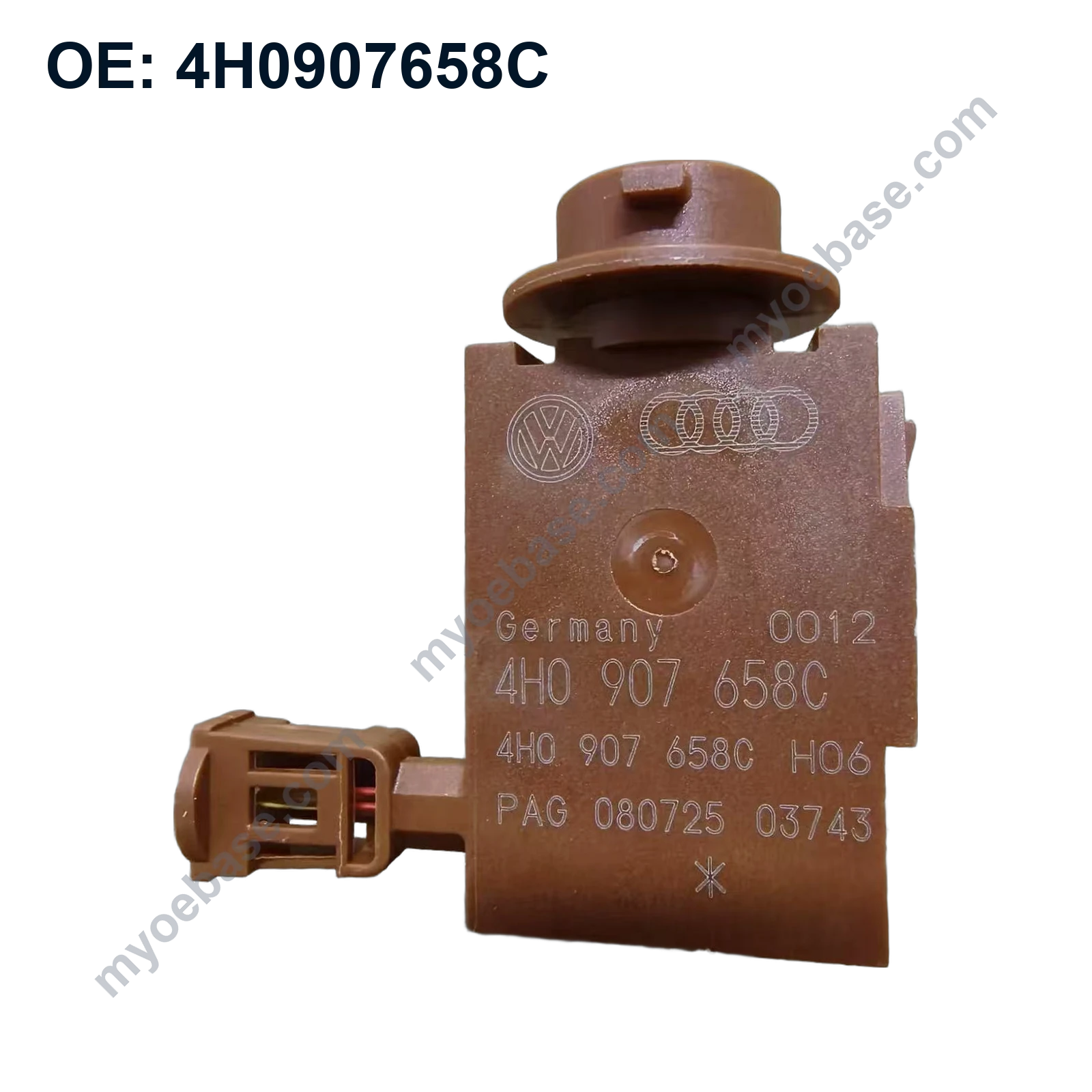
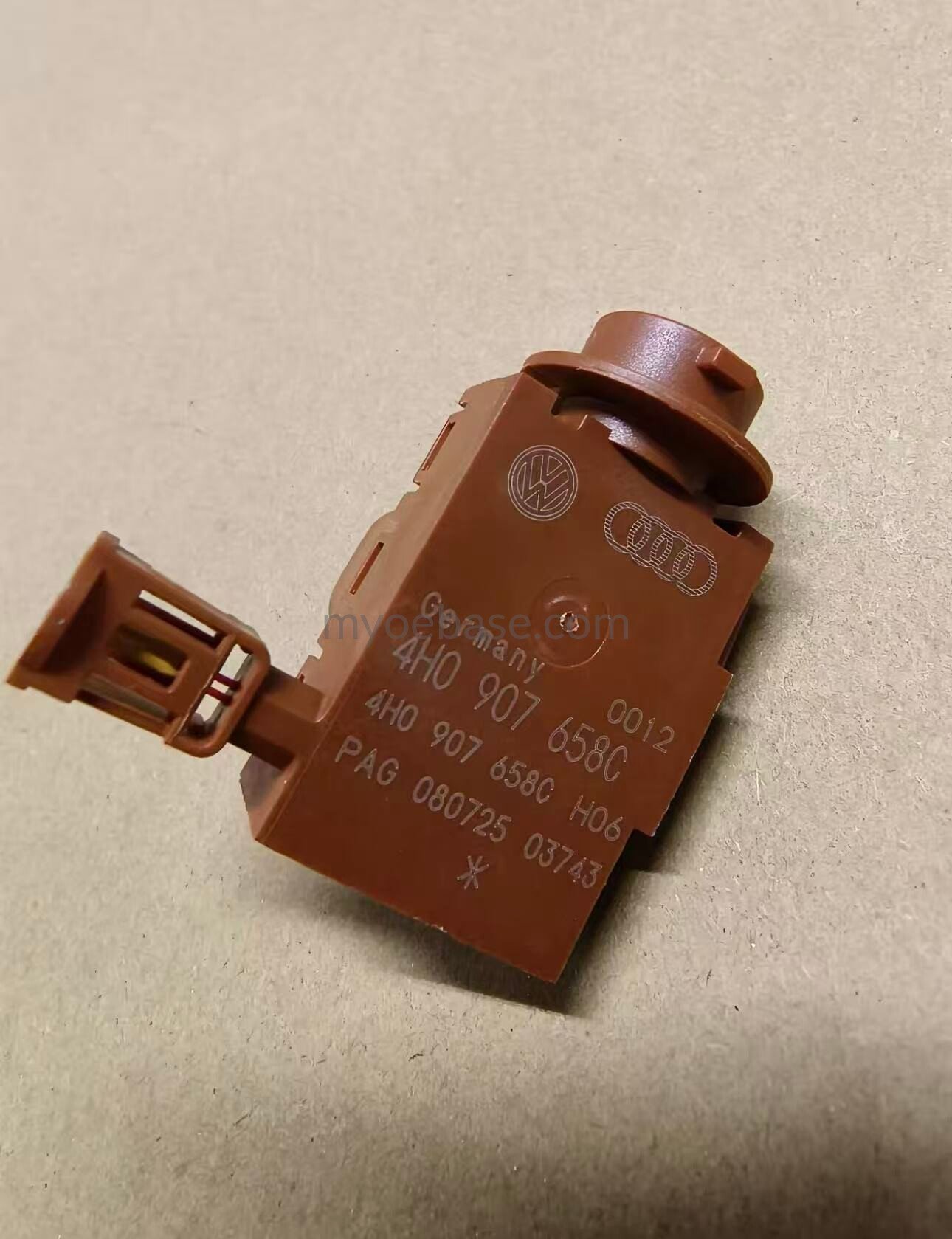
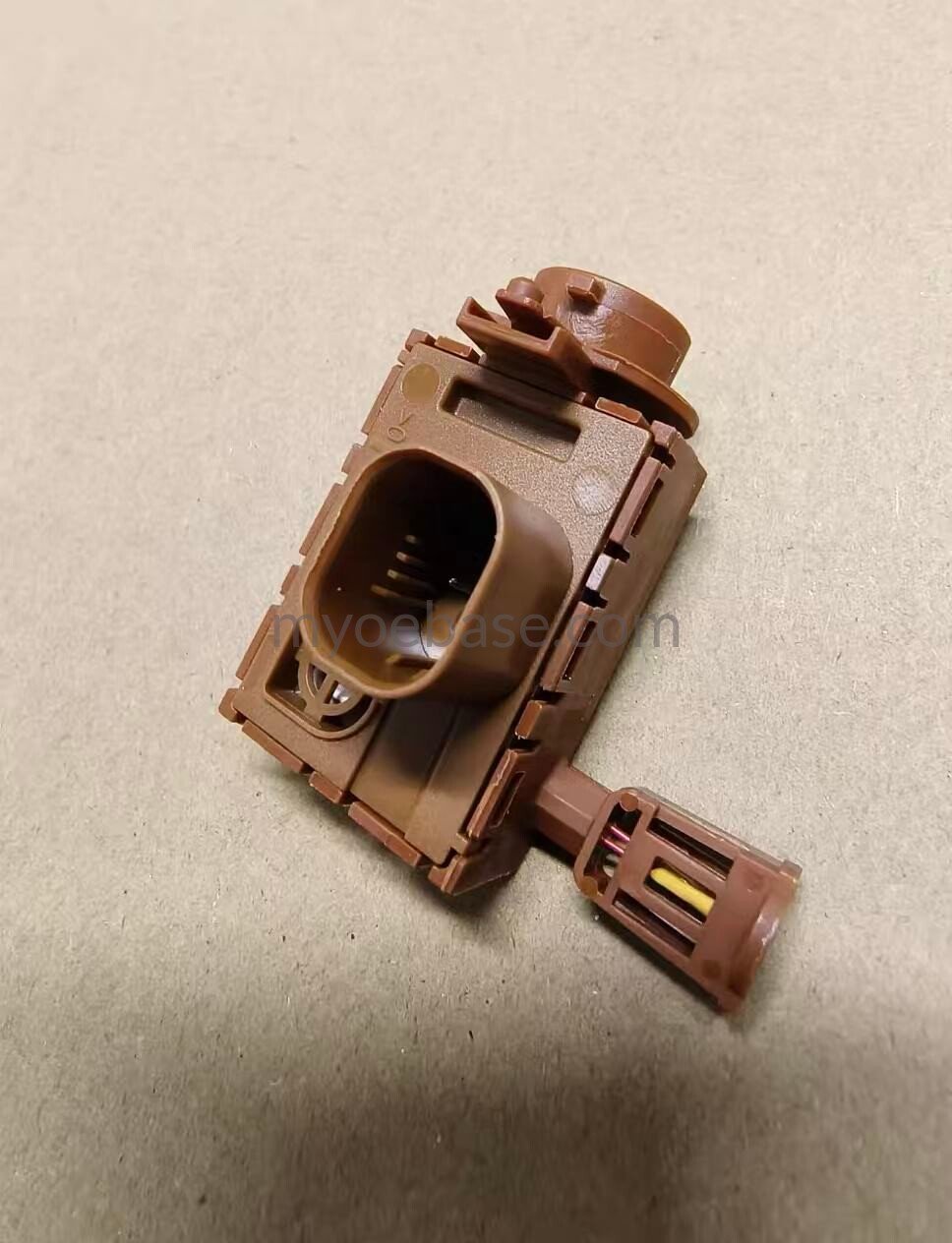
The 4H0907658C Humidity Sensor is a brand new genuine OEM air quality and cabin climate control sensor for Audi models built from 2017 onward. It is the small brown plastic unit that Audi fits into the instrument panel air duct or the cowl area on cars with 3 zone or 4 zone Climatronic: a compact housing with a round mounting flange, a snap tab on top, a small circular dimple in the centre of the face, a brown connector socket at the lower left and a slotted grille probe on the rear face that samples the air flowing past it. The face carries the factory laser markings: the VW roundel, the Audi four rings, Germany, 0012, 4H0 907 658C, HO6 and the PAG date code. This is a genuine, brand new, unused original equipment part, not a reconditioned pull, not a copy with a blank face and not a sensor with the markings worn away.
Air quality and humidity sensor for Climatronic — one brand new genuine OEM 4H0907658C sensor for the Audi A8, Q7, Q5, A6, A7, A5, A3 families and the e-tron.
OE/OEM Part Number:
4H0907658C, 4H0 907 658 C, 4H0-907-658-C, 4H0907658A
4H0907658C is the current OE number and it supersedes the earlier 4H0907658A: the official Audi parts catalogue lists the supersession chain 4H0-907-658-C over 4H0907658A, so cars that were built with the A version are serviced with this C version. The same sensor appears in the catalogue under the description Sensor AIR Quality, Ambient, Cabin Temperature, HUMIDITY, and it turns up in two different diagrams depending on the model: the INSTRUMENT PANEL DUCTS diagram as the humidity sensor in the duct, centre, front outer, with and without ionizer, and the COWL diagram as the air quality sensor. Do not confuse it with the separate headliner humidity sensor, the outside ambient air temperature sensor, the sun load sensor or the smaller temperature probes used on older Audi platforms: those are different parts with different numbers. You can check the published catalogue entry and fitment list here before ordering.
Identifying the correct sensor
Compare the unit in your car with the photograph, not with the model name. This one is a compact brown plastic housing with a round mounting flange, a snap tab on the top edge, a small circular dimple in the middle of the face, a brown connector socket at the lower left and a slotted grille probe on the back that slides into the air stream. The factory laser markings on the face are the fastest check: the VW roundel, the Audi four rings, the word Germany, the digits 0012, the line 4H0 907 658C with HO6, and the PAG 080725 03743 date code. Read the number on your old sensor first: 4H0907658C or 4H0907658A belongs to this family, while other Audi climate sensors carry completely different numbers. Second, check the connector: the socket sits at the lower left of the housing and takes a small multi pin plug from the climate control harness. If your car is near a model year boundary, an import or has a non standard zone configuration, confirm by VIN before ordering.
What this sensor actually does
Modern Audi Climatronic systems cannot hold the cabin comfortable or keep the glass clear without accurate air data. The 4H0907658C Humidity Sensor sits in the air path and measures the relative humidity and the temperature of the air flowing through the duct, and on the models where it is mounted at the cowl it also serves as the air quality sensor that samples the outside air. The climate control module uses those readings to decide how hard to drive the evaporator, when to dry the cabin air, when to close the recirculation flap to keep exhaust fumes and dust out, and how to balance the separate zones so the driver and passenger sides can be set differently on 4 zone cars. Without a valid signal the system falls back to a default model, the glass fogs up in damp weather, the air conditioning feels weak or erratic and the automatic functions stop reacting properly to the weather outside.
Symptoms of a failing sensor
A failed or drifting unit does not usually stop the air conditioning outright, it makes the system behave strangely. Typical complaints are a windscreen that fogs up and will not clear even with the blower on high, the A/C drying the air poorly in damp weather, the recirculation flap behaving erratically, one zone of a 4 zone system stuck cold or hot, or a climate control fault message stored in the module. Moisture ingress at the connector, a cracked housing or a blocked grille probe give the same picture. Do not confuse a bad sensor with a low refrigerant charge, a failing compressor, a clogged cabin filter, a leaking evaporator or a faulty blower motor: those cause similar complaints but the fault codes and the measured values tell them apart, so read the climate control block with a scan tool before buying parts.
Diagnose before you buy
Scan the climate control module and read the live measured values for humidity and duct or ambient temperature. A healthy sensor reports values that move smoothly when you breathe on the grille probe or change the blower speed; a failed one is stuck, reads a fixed error value or drops off the bus. Inspect the connector for bent pins, green corrosion or water, because a wiring fault produces exactly the same symptoms and a new sensor will not cure it. Compare the number and the laser markings on the old unit with the photograph and the OE block above, and check the zone configuration of your car: 3 zone and 4 zone Climatronic use this sensor while simpler manual systems may not have one at all. Replacement is the right fix when the sensor itself fails the live value test or the housing or probe is damaged.
Fitment – read this before ordering
The official catalogue lists this part for roughly 490 Audi variants across 48 model lines between 2017 and 2026, in 3 zone and 4 zone air conditioning configurations, and in some applications without automatic climate control it is not fitted at all. The rows below are the main model families; the VIN and the number on the old sensor are what actually decide the fit. Rows marked Not covered are the applications most often confused with this part.
| Brand | Model | Year | Notes |
|---|---|---|---|
| Audi | A8 / S8 (4N D5) | 2017 – 2022 | 4 zone AC; supersedes 4H0907658A |
| Audi | A6 (4K C8) / A6 Allroad / S6 | 2018 – 2025 | Instrument panel ducts; confirm zone config |
| Audi | A7 / S7 (4K) | 2018 – 2025 | Same duct sensor; confirm by VIN |
| Audi | Q5 / SQ5 / Q5 PHEV (FY 80A) | 2017 – 2025 | 4 zone AC; check old number |
| Audi | Q7 / SQ7 (4M) | 2016 – 2025 | Cowl air quality position; 3 and 4 zone AC |
| Audi | A3 / S3 / RS3 (8V late, 8Y) | 2017 – 2025 | Some trims without auto climate are not fitted |
| Audi | A5 / S5 / RS5 (F5 Coupe Cabrio Sportback) | 2017 – 2025 | Confirm by VIN and zone config |
| Audi | e-tron / e-tron Sportback (GE) | 2019 – 2025 | Catalogue lists e-tron Quattro; VIN check |
| Audi | A6 Quattro / A7 Quattro convertible and coupe bodies | 2017 – 2025 | Front position, with or without ionizer |
| Not covered | A4 (8W B9) and A5 8W platform cars not confirmed in catalogue | 2016 – 2025 | Verify by VIN; a different sensor number may be required |
| Not covered | VW, Skoda, Seat models with air quality sensors | All years | Different numbers such as 5K0907659, NOT interchangeable |
| Not covered | A8 D4 4H and Q7 4L pre-2016 cars with other sensor numbers | 2002 – 2016 | Earlier platforms use different climate sensors |
| Not covered | Headliner humidity sensor, sun load sensor, outside temperature sensor | All years | Different parts in the same climate system |
Fitting – read this before you start
Disconnect the battery earth lead first so the climate module does not register a fault while the sensor is unplugged. Locate the sensor in the instrument panel duct or the cowl area according to your model, reach the small multi pin connector at the lower left of the housing and release it, then unclip the round flange from its seat: the snap tab on the top edge releases downwards and the flange lifts out of the duct opening. Do not pull on the wiring and do not lever against the duct. Fit the new sensor by seating the flange square into its opening until the snap tab clicks, reconnect the plug until it locks, and wipe nothing onto the grille probe. Reconnect the battery, clear any stored fault codes, then run the Climatronic in auto and watch the humidity measured value settle into a sensible reading while you breathe near the vent. Check that the windows stay clear on a damp morning road test before closing the trim panels back up.
What is not included and what does not fit
The price is for ONE 4H0907658C Humidity Sensor. The connector pigtail, wiring harness, duct panels, the headliner sensor, the sun load sensor, the outside temperature sensor, the cabin pollen filter and fitting labour are NOT included. Two exclusions matter most. First, the air quality sensors used across VW, Skoda and Seat models, such as the 5K0907659, are a different family and are NOT interchangeable with this Audi sensor. Second, the separate sensors in the same Audi climate system, the headliner humidity sensor, the sun load sensor and the ambient outside temperature sensor, carry their own numbers and cannot substitute this unit. If your old sensor has a different number, a different connector position or no flange at all, contact us before ordering. Always match the number on the old sensor and confirm by VIN.
Warranty and returns
This is a brand new genuine part covered by our twelve months warranty against manufacturing defects from the date of delivery. The warranty covers the housing, the round flange, the snap tab, the connector socket and the grille probe assembly. It does not cover damage from forcing the connector, bending the pins, water ingress caused by an incorrectly seated flange, damage to the grille probe from tools, or faults that come from a wiring harness problem or a defective climate control module rather than the sensor itself. If the number on your old sensor does not match the OE block above, contact us before fitting so we can check your VIN. Keep the original packaging and proof of purchase for any claim.
Packing and dispatch
Each sensor is dispatched with the connector socket protected so the pins cannot be bent in transit and the grille probe cushioned so the slotted tube arrives straight, and the laser marked face is faced away from the padding so the markings cannot be scuffed. Because this sensor is a common service item across dozens of Audi models from 2017 onward, the 5 pcs and up and 20 pcs and up tiers are priced for independent garages, mobile mechanics, fleet operators and resellers who want shelf stock of the same number for routine climate control repairs.
Not sure this is your sensor?
Send us your VIN and a clear photograph of the laser marked face of your old sensor, plus one photograph of the connector end and one showing where the unit is mounted in the duct or cowl. We will confirm whether the 4H0907658C Humidity Sensor is correct before you order. Please do the same if your car is an A4, a car without automatic climate control, an import specification or a car near a model year boundary, because those are exactly the cases where a similar looking sensor with a different number is required. Confirming first avoids an expensive mistake and a car off the road.
Trade and quantity pricing
The 1 pc (sample) tier is for a single repair or for checking the sensor against your old unit before you commit to stock. The 5 pcs and up and 20 pcs and up tiers are priced for independent garages, body shops, fleet operators and resellers who service several Audi models from 2017 onward a month. All three tiers are the same genuine 4H0907658C sensor with the same twelve months warranty; only the unit price changes. If you need a mixed order across our other sensors and climate parts, contact us and we will quote the whole basket.
Do not confuse this listing with our other parts
This listing is the 4H0907658C Humidity Sensor for Audi only. Our 5K0907659 AQS Sensor is the VW, Skoda and Seat air quality humidity sensor G238 for a different range of cars, our 8V0906262D Oxygen Sensor is the Bosch wideband lambda probe for the exhaust system, and our 3Q0907550E Radar Sensor is the ACC front radar. None of them is a cabin climate sensor and none can be substituted for this part. If your complaint is fogged glass or erratic air conditioning, read the climate control fault codes before choosing which of these parts you need.