

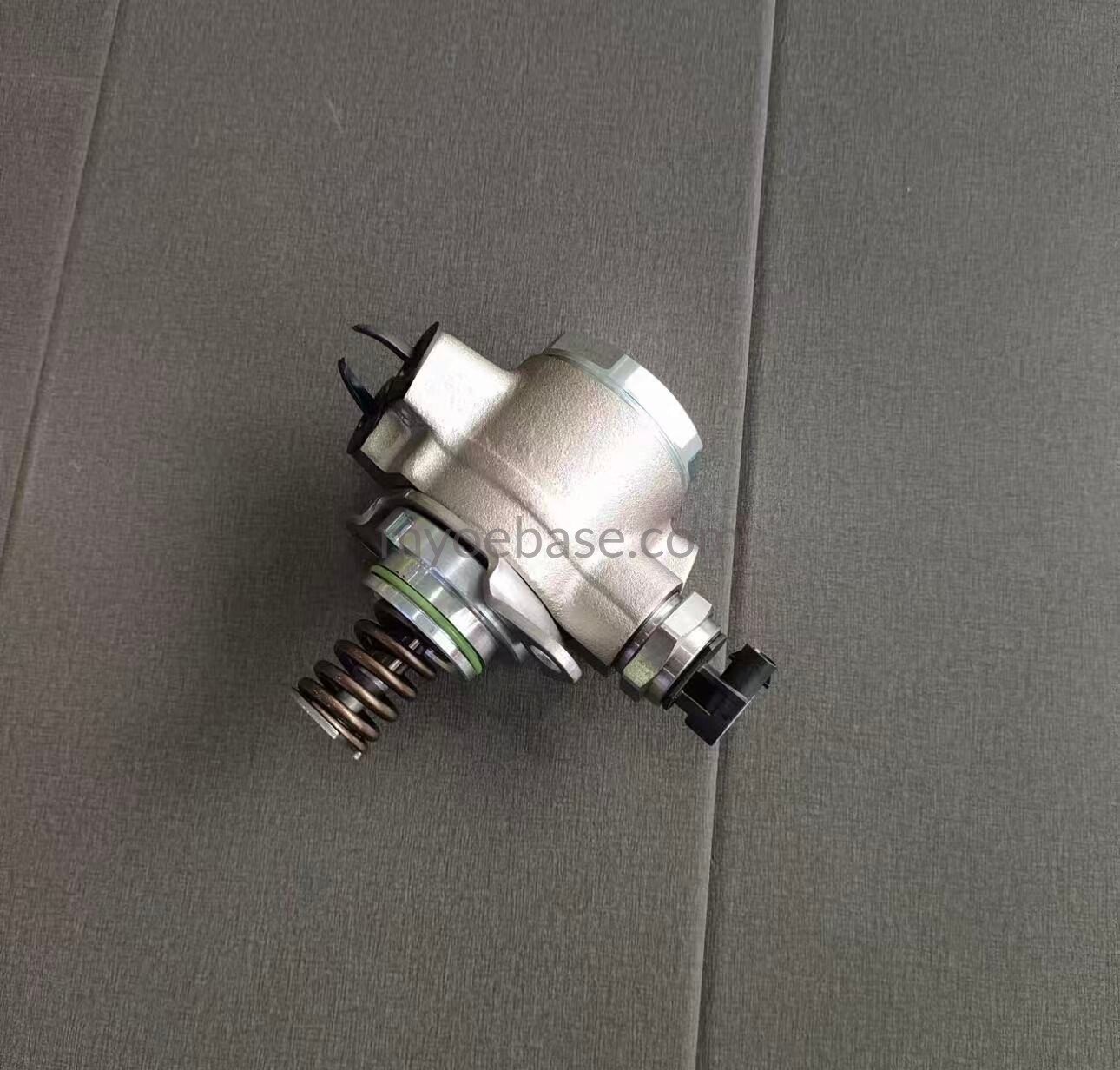
About this part
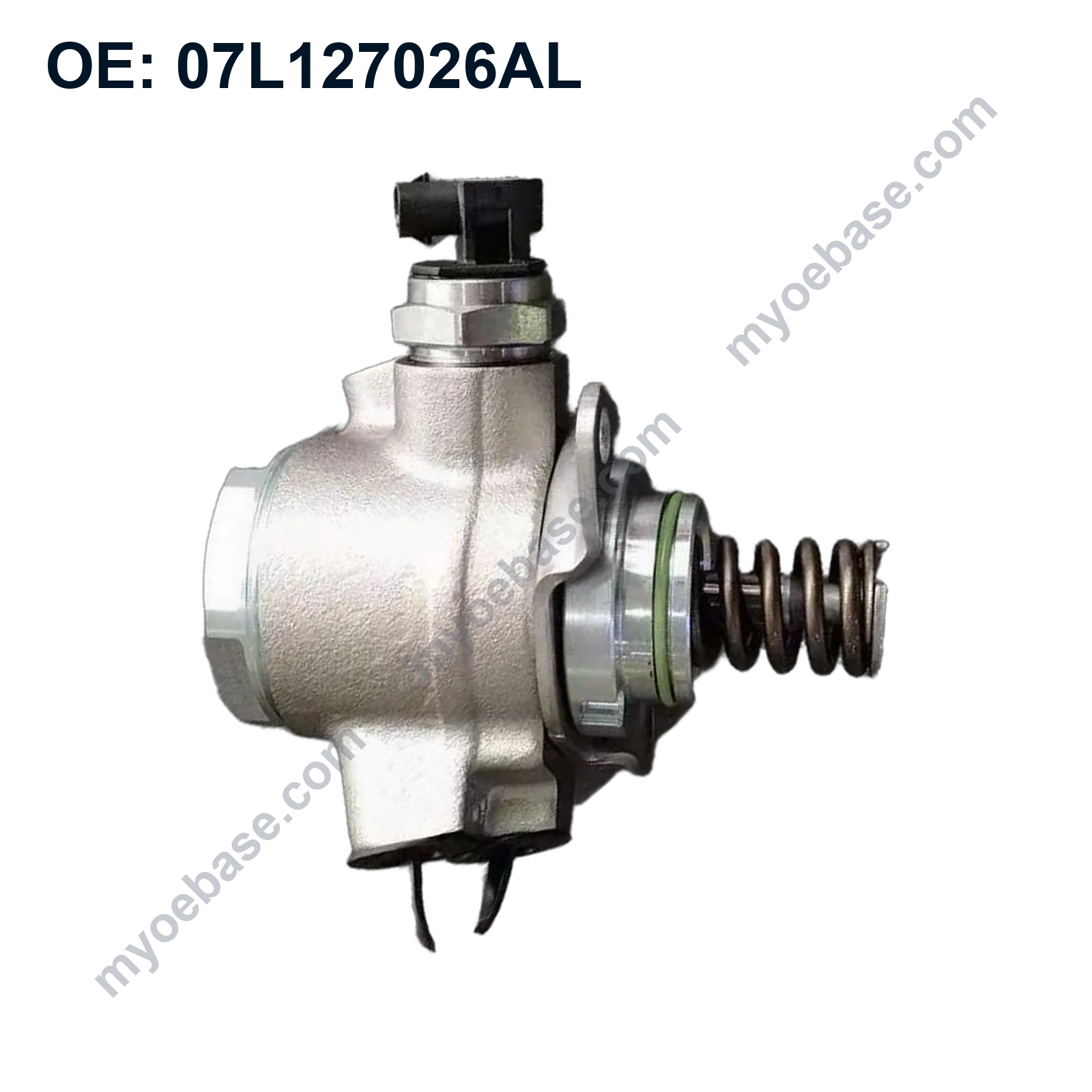
The 07L127026AL high pressure fuel pump is the genuine OEM cam-driven pump for the Audi 3.0 TFSI supercharged V6 engine family and the 4.2 FSI V8, built to the Hitachi HFS034103 design and catalogued by Pierburg as 7.06032.09.0. Bolted to the cylinder head and driven off the camshaft, it lifts fuel from the low-pressure circuit up to well over 100 bar for the direct injection injectors, on everything from the B8 S4 and 8T S5 to the SQ5, the Q5, Q7 and A6, A7, A8 3.0 T, the RS4 and RS5 4.2 FSI V8, and the VW Touareg Hybrid. It is a brand new, genuine quality part, supplied as one ready-to-fit unit with the tappet and the return spring, for workshops and owners chasing a low fuel pressure fault, a long crank before start, or the limp mode that follows a tired pump.
high pressure fuel pump — genuine 07L127026AL cam-driven high pressure fuel pump for the Audi 3.0 TFSI supercharged V6 and the 4.2 FSI V8; direct replacement for 07L127026E, F, J, K, AB, AH, AK, P and Q, and the 06E127025 series behind them.
OE/OEM Part Number:
07L127026AL, 07L127026AB, 07L127026AH, 07L127026AK, 07L127026E, 07L127026F, 07L127026J, 07L127026K, 07L127026P, 07L127026Q, 06E127025N, 06E127025Q, 06E127025S, 06E127025T, 06E127025AC
Pierburg: 7.06032.09.0
What the pump does, and why it fails
The heart of the direct injection system. FSI engines spray fuel straight into the combustion chamber at pressures a normal in-tank pump could never reach, and this pump is what makes that pressure. Driven off the camshaft through a tappet, the plunger strokes several times per second, and the ECU meters delivery so rail pressure tracks demand from idle to full load. On a supercharged 3.0 TFSI the duty is heavy: boost comes on from low rpm and the fuel demand spikes hard, so when delivery falls behind, the ECU reacts fast — first with pressure adaptation, then with a fault code and limp mode.
Failure mode one: plunger and tappet wear. The plunger runs in its barrel lubricated only by the fuel itself, and the tappet that follows the cam takes the full drive load. Petrol with poor lubricity, ethanol blends and hard use accelerate the wear. The first symptoms are slow to build pressure: extended cranking before the engine catches, a rough idle in the first seconds after start, and P0087 (fuel rail / system pressure too low) under load, worst on a hot restart. As the clearance grows, the pump falls behind at high rpm and the engine misfires or cuts torque.
Failure mode two: the internal shaft seal. The seal between the pump drive and the plunger barrel wears with age, and when it leaks, fuel escapes past the drive straight into the camshaft housing and from there into the engine oil. Nothing dramatic happens at first — just a faint fuel smell and an oil level that creeps up — but the diluted oil loses its film strength and bearing damage follows, up to a major engine failure. Rising oil level on a 3.0 TFSI or a 4.2 FSI V8 should always put the high pressure pump seal on the suspect list.
Failure mode three: tappet and cam damage. A worn or scored tappet chews into the cam lobe that drives it, and metal debris travels through the pump into the rail and the injectors. A damaged lobe then destroys a new pump in short order, so any pump replacement on a high-mileage engine should include an inspection of the cam lobe and the tappet face before the new unit goes in.
Symptoms, diagnosis and installation
• Typical symptoms — extended cranking before a hot or cold start, rough idle in the first seconds, hesitation or a flat spot under load or full boost, P0087 / P0088 fuel pressure faults, limp mode with the EPC light, random misfires with fuel pressure correlation codes, and on the seal-failure case an oil level that rises and oil that smells of petrol.
• Confirm it before ordering — read the fault codes first: pressure-too-low under load points at the pump, while pressure faults at idle only often point at the low-pressure sender or the in-tank pump. Watch actual versus demanded rail pressure on a scan tool through a full throttle pull: actual falling behind demanded as rpm climbs is the pump. Check the low-pressure side too — a clogged filter or a weak lift pump starves the high pressure pump and mimics a worn unit. If the oil level is climbing, send a sample for dilution testing before the bearings pay for it.
• Installation notes — relieve the fuel pressure and disconnect the battery before opening the system. Remove the high-pressure pipe, the supply line and the connector, then unbolt the pump from the cylinder head. Fit new seals and a new high-pressure pipe seal where specified — reusing the pipe seals is the most common cause of a pressure leak after the job. Refit in reverse, torque the mounting bolts and the pipe union to the published figures, prime the system by cycling the ignition, then bleed and verify rail pressure against demand on a scan tool before releasing the car. Clear the stored faults and the pressure adaptations.
• Fitment caution — the 07L127026 series spans more than a decade of engines and the supersessions are easy to confuse: the early letters (E, F, J, K) belong to the first 4.2 FSI V8 years, AB/AH/AK/AL to the 3.0 TFSI supercharged era, and the 06E127025 numbers are the same pump family under an older part set. The later 3.0 TFSI with combined direct and port injection and the turbocharged generations that followed use different pumps. Confirm the old pump number on the unit or send us a photo of the original before ordering.
Fitment
The 07L127026AL pump serves the whole 3.0 TFSI supercharged V6 family — B8 S4, 8T S5, SQ5, Q5, Q7, and the 3.0T versions of the A6, A7 and A8 — the 4.2 FSI V8 of the RS4 and RS5, and the VW Touareg Hybrid. The engine code, not the model name, is the reliable check, because Audi reused model names across engines with different pumps. The table below lists the usual applications; confirm yours against the old unit before ordering.
| Make | Model | Years | Engine |
|---|---|---|---|
| Audi | S4 B8 Sedan / Avant / allroad | 2009 – 2016 | 3.0 TFSI supercharged V6 — CAKA, CCBA, CGWA |
| Audi | S5 8T Coupé / Cabriolet / Sportback | 2009 – 2017 | 3.0 TFSI supercharged V6 — CAKA, CCBA, CGWA, CGXB |
| Audi | SQ5 8R / Q5 3.0T 8R | 2013 – 2017 | 3.0 TFSI supercharged V6 — CTUD, CTXA, CJWB |
| Audi | A6 C7 / A7 Sportback 3.0T | 2012 – 2018 | 3.0 TFSI supercharged V6 — CREC, CREH |
| Audi | A8 D4 3.0T | 2013 – 2018 | 3.0 TFSI supercharged V6 — CGXD |
| Audi | Q7 4L 3.0T | 2011 – 2015 | 3.0 TFSI supercharged V6 — CREC |
| Audi | RS4 B7 / RS5 8T | 2006 – 2015 | 4.2 FSI V8 |
| VW | Touareg 7P Hybrid | 2011 – 2015 | 3.0 TFSI supercharged V6 hybrid |
Shipping and packing
Orders leave within one to two working days of cleared payment, packed in a foam-lined box with the plunger protected so the drive end, the pipe unions and the tappet arrive undamaged. Tracking is emailed when the parcel is handed to the carrier. Customs charges, where they apply, are the buyer’s responsibility.
Condition & warranty
Brand new genuine quality 07L127026AL pump, twelve months warranty against manufacturing defects covering the pump as supplied. The warranty does not cover damage from fuel contamination or wrong-spec fuel, from a worn cam lobe or tappet that was not inspected before fitting, from a blocked fuel filter starving the pump, or from incorrect installation torque. If a part arrives faulty, send us photos and the fault scan before returning anything.
Wholesale
Tiered pricing for 1 pc, 5 pcs and 20 pcs is shown below. Workshops and resellers servicing 3.0 TFSI and 4.2 FSI engines should ask for a combined quote — we price mixed orders of high pressure pumps, injectors, seals and low-pressure senders together, and the RS cars can need more than one job done at once.